

Paid Skinstric internship
Turning supplied designs and requirements into a working browser experience.
I implemented a responsive AI skin-analysis flow using the design, assets, APIs, and phased requirements provided for my paid internship with Skinstric.
01 / The assignment
Take an existing design and make the full interaction work.
I worked from supplied visual direction, assets, external APIs, expected behavior, and phased requirements. My job was to translate those inputs into a responsive Next.js application and connect the pieces into one working flow.
02 / The challenge
Several browser features had to work together without feeling disconnected.
The project moves from validated intake data into API requests, image upload or camera capture, and demographic results that a user can review and adjust. That meant managing browser permissions, image conversion, application state, navigation, asynchronous feedback, and responsive behavior across the flow.
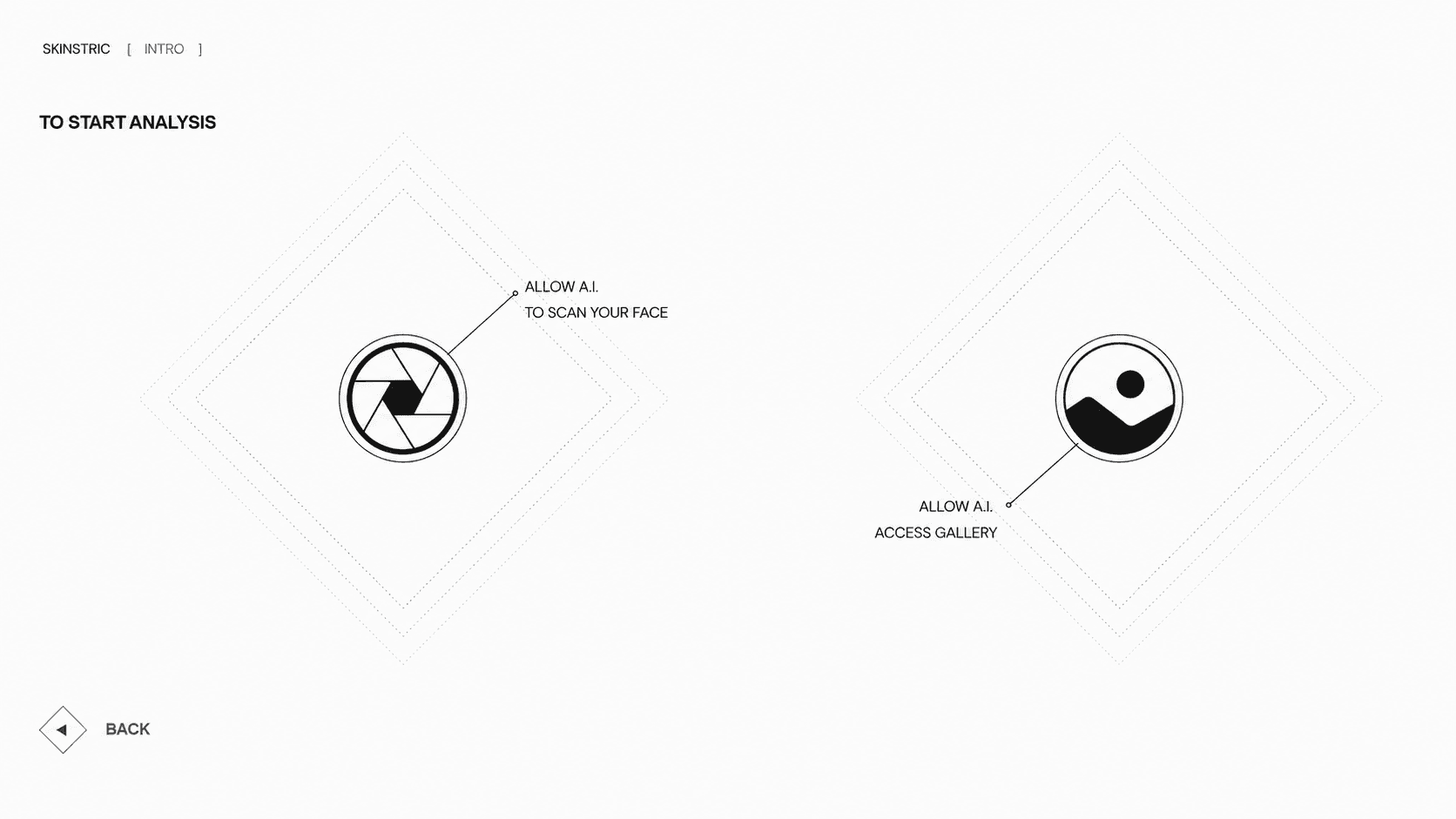
The analysis flow gives users two browser-media paths: capture an image with the camera or select one from the gallery before continuing into the analysis experience.
03 / What I implemented
The technical work behind the experience.
- Responsive landing, intake, scan, results, and demographics routes
- Controlled name and location inputs with validation
- External API requests, local persistence, navigation, and error feedback
- Gallery upload with FileReader and Base64 conversion
- Camera permission, live video preview, canvas capture, JPEG conversion, and media cleanup
- Demographic ranking, confidence display, correction, reset, and confirmation flows
04 / What this project shows
I can work from someone else's requirements and turn them into a functioning interface.
Skinstric is different from PawCircle because I did not define the product or visual design. The value of this project is in the implementation: following supplied requirements, working through unfamiliar browser APIs, connecting multiple states and routes, and keeping the experience usable across screen sizes.
It also gave me practice debugging a more involved user flow instead of building isolated components or a static page.